
By Erik Lenhart and Stephen R. Nagy
China has increasingly promoted the idea of a U.S.-China “G2,” suggesting that the world’s two largest powers can manage their rivalry and avoid the so-called Thucydides Trap, the scenario when a rising power and a status quo power come into conflict or friction. But for now, the concept remains more aspiration than geopolitical reality.
The U.S.-Japan alliance is supported by the Treaty of Mutual Cooperation and Security, regular 2+2 ministerial consultations, integrated military planning, intelligence sharing, joint exercises, defense industrial cooperation, and expanding economic security coordination. By contrast, the current Trump-Xi relationship relies heavily on personal diplomacy. Even if the two leaders enjoy good chemistry, Trump’s well-known unpredictability demonstrates that personal rapport alone is an insufficient foundation for a lasting strategic partnership.
Takaichi’s government understands this reality. Rather than focusing solely on diplomatic symbolism, Tokyo is deepening Japan’s role as an indispensable geographic, diplomatic, economic and technological partner for the U.S. Japanese firms remain among the largest foreign investors in America. Investments by Toyota, Honda, Nissan, Mitsubishi, SoftBank, TSMC’s Japanese partners, and a growing number of semiconductor and advanced manufacturing projects have strengthened economic interdependence. Tokyo’s broader objective is to ensure that Japan remains an essential component of trusted supply chains in semiconductors, advanced materials, batteries, and critical technologies.
The most visible point of friction during the Trump-Takaichi meeting was the International Criminal Court (ICC). Trump has long viewed the ICC with suspicion and has sought to shield both himself and American officials from its jurisdiction. It reflects a longstanding bipartisan American skepticism toward the Court rather than a uniquely Trumpian position. President Bill Clinton signed the Rome Statute on December 31, 2000, but explicitly declined to recommend ratification until fundamental U.S. concerns regarding the Court’s jurisdiction were addressed.
Takaichi faces a delicate balancing act. On one hand, the ICC is currently headed by Japanese Judge Tomoko Akane, making criticism of the institution politically sensitive in Japan. On the other hand, Tokyo has little interest in turning a legal dispute into a strategic disagreement with its most important ally. Her first-ever address to the United Nations reflected that carefully calibrated approach. She supported the international rules-based order without unnecessarily antagonizing Washington.
Pageantry and symbolism, rather than substantive breakthroughs, were the defining features of Xi’s three-day state visit. Beyond temporary trade-truce extensions, the summit produced few tangible results. Both leaders largely performed for domestic audiences. Xi emphasized historical narratives and Taiwan, while Trump focused on trade and economic issues ahead of the midterm elections.
The symbolism of the “Second World War alliance” invoked during the visit also obscures present realities. Approximately 160,000 Americans died in the Pacific War against Imperial Japan. Yet postwar reconciliation transformed Japan into America’s closest and most trusted ally in Asia. China presents a starkly different challenge. Over the past decade, hundreds of thousands of Americans have died from overdoses involving synthetic opioids, including fentanyl. While responsibility is shared among criminal networks, traffickers, regulators, and multiple governments, precursor chemicals originating from China have remained a major component of the illicit fentanyl supply chain. At the same time, Beijing continues providing critical economic and technological support to Russia while maintaining close ties with Iran. Neither policy serves American strategic interests.
Ironically, Trump and Xi often display similar instincts when it comes to international law. Both tend to support legal principles when convenient and disregard them when they conflict with national interests. Yet even this convergence has limits. The U.S. in July reaffirmed support in a joint statement for the 2016 arbitral ruling under the U.N. Convention on the Law of the Sea, which rejected China’s expansive South China Sea claims. Beijing continues to reject the ruling entirely. This illustrates the broader reality that U.S. and Chinese interests frequently diverge despite periodic diplomatic rapprochement.
China presents itself as a champion of the so-called Global South, yet its overseas activities frequently reveal a more transactional diplomatic reality. Across Africa and South America, Chinese mining, infrastructure, and resource-extraction projects have been associated with environmental degradation, weak accountability, pollution, and community displacement. From Zambia and the Democratic Republic of Congo to Peru and Ecuador, critics argue that Beijing’s priority is securing resources and geopolitical influence rather than promoting sustainable development or strengthening local governance. China’s doctrine of non-interference may appeal to political elites, but it often leaves local communities to bear the environmental and social costs of extraction.
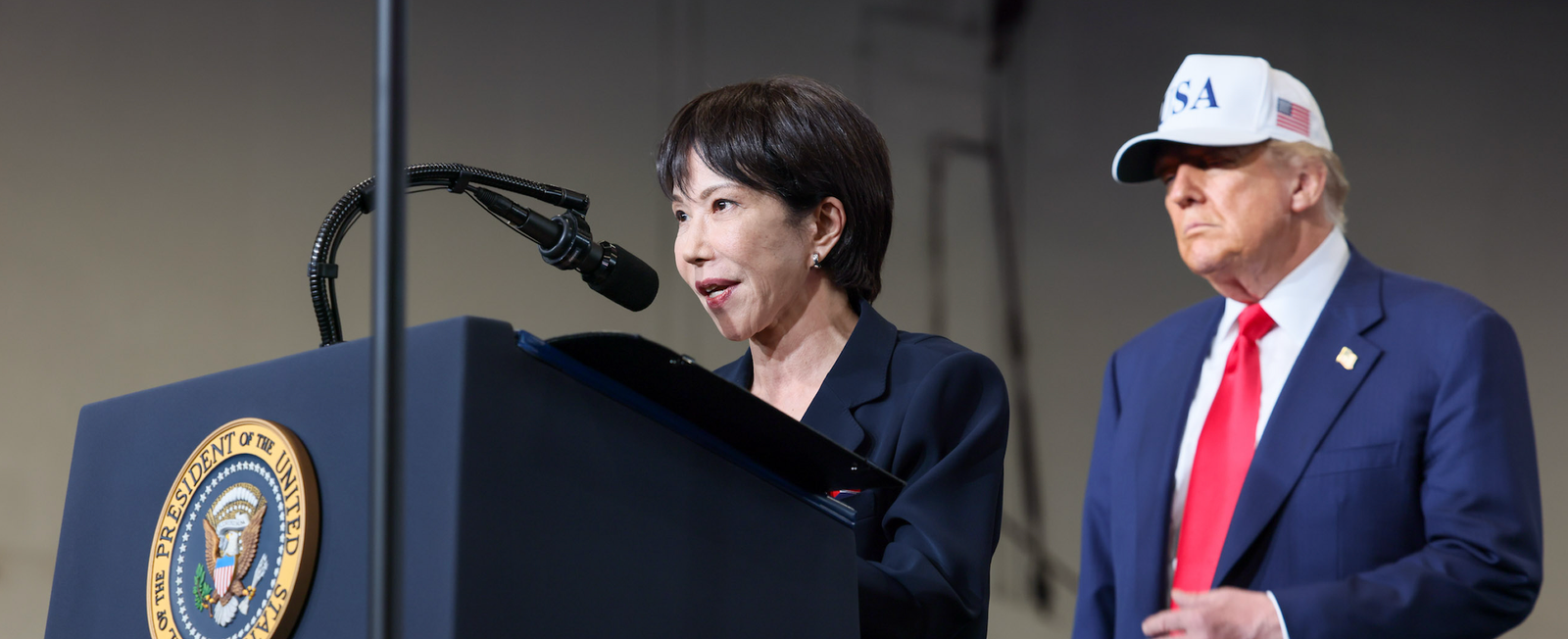
Unlike Xi Jinping in Washington, Sanae Takaichi did not receive a red-carpet spectacle in New York. Yet her quieter, pre-emptive diplomacy may ultimately prove more consequential. Takaichi was wise to refrain from publicly commenting on the Trump-Xi summit, reflecting strategic confidence rather than anxiety. The U.S.-Japan alliance rests on foundations far more durable than summit optics: decades of institutionalized cooperation, mutual trust, military coordination, economic integration, and shared strategic interests. As Takaichi noted after the meeting, Japan and the U.S. transformed a wartime rivalry into one of the world’s closest alliances. Xi may have received the pageantry, but spectacle should not be mistaken for substance. The foundations of the U.S.-Japan alliance remain significantly stronger than the fleeting optics of any single U.S.-China summit.
Erik Lenhart (erik.lenhart1@gmail.com) is a former Deputy Chief of Mission of the Slovak Republic in Tokyo and the author of the award-winning novel Daughters of the Empire.
Stephen R. Nagy (nagy@icu.ac.jp) is a professor at International Christian University, a senior fellow at the Macdonald-Laurier Institute and a visiting fellow at the Japan Institute for International Affairs. His new book “Japan as a Middle Power State” will be released by Routledge this fall.




