
By Mohd. Yunnas
Migratory freshwater fish populations worldwide, including across Asia’s major river systems, have collapsed by around 80 per cent over the past six decades. As fish disappear, the impacts cascade beyond biodiversity loss, disrupting food systems, undermining livelihoods, and exposing a widening regional emergency that extends far beyond the rivers themselves.
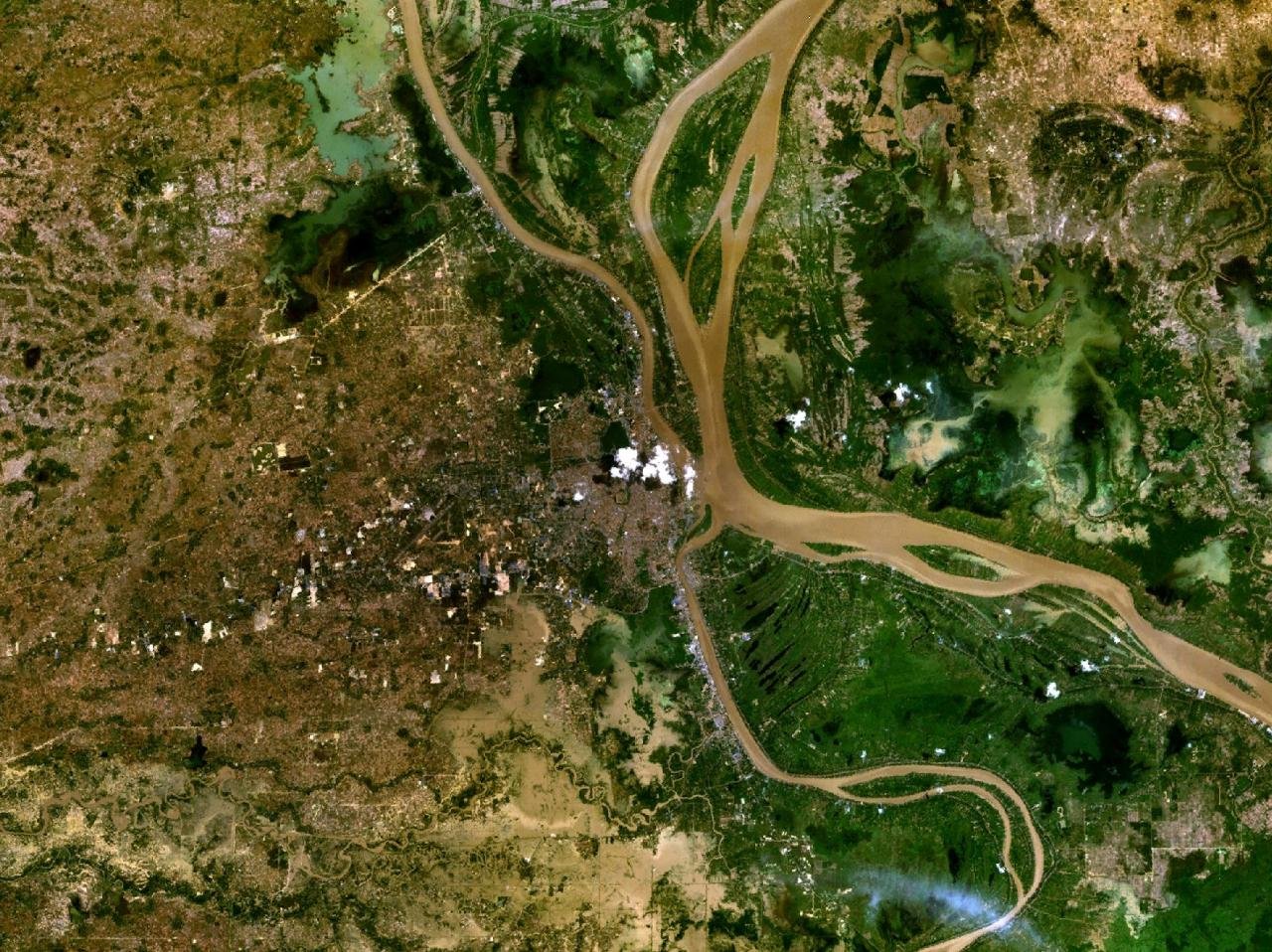
Nowhere is this crisis more visible, or more geopolitically consequential, than in the Mekong basin, which illustrates dynamics playing out across many of Asia’s transboundary rivers. A long-term analysis of fish catch data in the Mekong River reveals a sharp, system-wide decline across most species, pointing to deeper disruptions at the basin scale. At its core, massive dam development has emerged as a major driver, with China playing a pivotal role. It has constructed a cascade of large dams on the upper Mekong, altering the river’s flow, temperature, and sediment load, which refers to the natural movement of sand and nutrients essential for downstream ecosystems. These changes are significant enough that they disrupt spawning.
Yet dams are only part of the story. Agriculture compounds the pressure. Pollution from fertilizer and pesticide runoff degrades water quality, while floodplain wetlands that serve as vital nurseries have been widely converted to paddy fields and aquaculture, trends made more damaging by altered flow regimes upstream. Meanwhile, overfishing of reproductive stocks further undermines recovery. Together, these pressures are eroding the Mekong’s ecological foundations, leaving its once-abundant fisheries increasingly fragile and less able to sustain dependent communities.
There are no quick fixes to a crisis as complex as the collapse of migratory fish in the Mekong, but responsibility is not evenly shared. While downstream countries drive much of the pressure from farming, fishing, and land conversion, the most immediate system-wide leverage lies upstream. As the dominant upstream actor, China holds disproportionate influence over the river’s flow, sediment, and seasonal rhythms, shaping the floods and dry periods that fish need to migrate and reproduce.
This makes the question not why dams exist, but how they are governed. Where dams cannot be avoided, their impacts must be more honestly confronted. Technical fixes alone have proven insufficient, particularly in a river system as biologically and socially complex as the Mekong. Governments and financiers involved in dam development and operation should require robust, transparent verification of ecological performance, addressing the current gaps in monitoring, and where mitigation falls short, enforce compensatory measures such as downstream habitat restoration.
In geopolitical terms, existing data-sharing arrangements, shaped in part by China through the Lancang–Mekong Cooperation framework, can support collaboration between upstream and downstream countries along the Mekong basin, but they remain limited in scope. While conditions have improved in recent years, they are still incomplete and insufficient for effective basin-wide management. Particularly, the critical operational information, including when and how much water dams store or release, remains restricted, creating uncertainty for downstream countries. Greater transparency, alongside coordinated dam management, is therefore essential to build trust and reduce ecological disruption across the basin.
At the same time, pressures downstream demand equal attention. The degradation of floodplains and water quality continues to accelerate. The conversion of wetlands into intensive agriculture, combined with fertilizer and pesticide runoff, is eroding the nursery habitats on which fish populations depend. Restoring these ecological foundations will require integrating fisheries into agricultural policy, reconnecting rivers to floodplains, tightening controls on agrochemical pollution, and promoting farming systems that align with seasonal flooding. In parts of Cambodia, for example, community fish sanctuaries and floodplain management have helped sustain both food production and biodiversity, offering practical models for wider adoption.
Equally important is how to address human pressures directly, particularly overfishing, which cannot be tackled through enforcement alone. For millions of small-scale fishers, declining catches are both a symptom and a driver of stress. Community-based fisheries management offers a more durable pathway, aligning conservation with local incentives through seasonal closures, habitat protection and shared governance. Evidence from across the Mekong River suggests such approaches can help stabilize catches locally and improve compliance when communities have a tangible stake in outcomes. The remaining challenge is scale, as many programs remain fragmented and dependent on external support. National governments must embed co-management into legal frameworks, backed by sustained public funding rather than short-term projects.
Finance is the final missing piece. International funding must be redirected to support effective systems. Commitments under the Kunming-Montreal Global Biodiversity Framework provide a foundation, but funding remains insufficient and unevenly distributed, with freshwater ecosystems particularly neglected. At present, most financing continues to favor large-scale infrastructure over ecosystem restoration or community-based management. For that, financial flows should prioritize ecosystem restoration, strengthen environmental standards for infrastructure, and better support river-dependent communities, who are often the most effective stewards. China, as a major regional financier, has an important role in shaping these standards through its overseas investments.
There is no single solution to a crisis as large and multi-causal as the decline of migratory freshwater fish in Asia. Many actors play a role, but responsibility is not evenly distributed. As the dominant upstream power and a major regional financier, China holds disproportionate influence over both the river’s physical dynamics and the standards that shape its future. Leadership therefore requires clarity. For China, this means three immediate steps: greater transparency in dam operations, coordination of river flows with downstream countries, and aligning development investments with stronger environmental standards. Transboundary water governance in Asia will move no faster than China’s willingness to lead, and the stakes are too high while the window for action is too narrow for incremental diplomacy alone.
Mohd. Yunus is a researcher from Riau Province, Indonesia. He holds a master’s degree in biological sciences from Khon Kaen University, Thailand. His expertise includes ecology, environmental economics, conservation, and sustainability.




