By Lydia Tze
Although Beijing has never publicly endorsed a timetable, U.S. and allied defense analysts broadly agree that China is racing to acquire the military capacity needed to coerce or seize Taiwan by 2027. Behind that buildup lies an unlikely but critical strategic dependency: helium.
China’s military capacity relies on a small atom – helium. The second lightest element in the universe has the key characteristics of being non-reactive and non-flammable which, coupled with the ability to remain a super-cold liquid near absolute zero, enable helium to serve an essential role in various military applications.
For example, the intimidating Chinese hypersonic anti-ship missiles, YJ-19 and Y-21, use rocket boosters. Rocket boosters are dependent on helium for fuel tank pressurization and their cooling systems, without which would interrupt their engine operation.
The offensive potential of the newly launched shipborne LY-1 laser is supported by helium as well. Some experts consider the LY-1 to be revolutionizing naval and land defense as it is capable of disabling a target’s optical sensors and optical seekers through concentrated heat. Although the shipborne laser is mainly powered by electricity, its high-energy laser system requires helium for cooling, efficiency maintenance, and damage prevention.
Although Beijing has implemented strategies to achieve supply chain independence, China still has an import dependency for helium and imported 85% of its helium supply in 2024.
The United States was once China’s key helium supplier. In 2017, the United States accounted for 1313.9 metric tons of China’s helium imports, ranking as the second largest supplier to China. Accompanying China’s dependency on U.S. helium was the exposure to supply threats that could significantly undermine its military capacity. If Washington imposed a helium embargo on China, the Chinese defense system would almost certainly be severely affected.
This is where Qatar comes in to give a friendly hand. Over the past few years, the share of Qatari helium in China’s total helium imports has been steadily growing to 90%, while the share of the United States has dropped below 5% as of 2024. In February 2025, Qatari company Qatar Energy and Chinese company G-Gas signed a 20-year agreement for the long-term supply of helium from Qatar to China. The agreement guarantees China 100 million cubic feet of high-purity helium (99.9999% purity) per annum. Due to the small share of U.S. exports in China’s current helium portfolio, a direct blockade of helium in a cross-strait war is no longer viable for Washington.
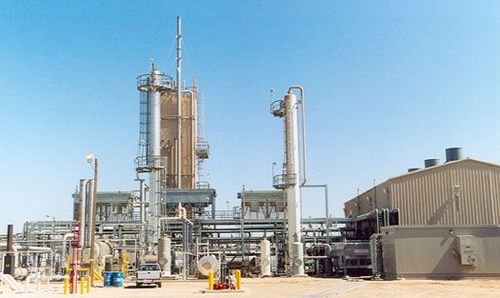
Nonetheless, the possibility that the United States would pressure Qatar into collective coercion cannot be fully eliminated. Since U.S. corporations heavily assisted the establishment of Qatar’s Helium 2 facility, Washington has the full potential to employ arm’s length restrictions on Qatar’s access to helium extraction technology as a way to indirectly impose a “stranglehold” on China’s helium supply.
But are the benefits of doing so greater than the possible damages to Washington’s relationship and financial ties with Qatar?
Qatar invests significantly more in the United States than the reverse. Since 2001, U.S. colleges and universities have received $6.25 billion from Qatar; between 2020 and 2025, Qatar has provided $9.1 million to U.S. think tanks. In May 2025, President Trump even secured a “historic” $1.2 trillion economic commitment from Qatar. This would inject the United States with an astronomical amount of investment, generating substantial influence on the U.S. economy. Is Trump ready to protect Taiwan at the cost of pressuring a gigantic investor to his country? Everything comes down to benefits and costs, and the potential benefit of an indirect helium blockade is unlikely to outweigh the costs of Qatar’s disapproval.
Furthermore, Qatar is highly entangled with China in the helium supply chain. While Qatar is the gas supplier to China, the gas tanks involved are made by Chinese companies. Manufacturing gas tanks is an intricate task that has to meet industrial standards, and the global helium supply chain is largely dependent on Chinese gas tanks. While these gas tanks could be purchased elsewhere, the economic costs would be much higher than Chinese products. Turning on China would imply more than just political costs.
As Qatar continues on its quest to become a dominant helium supplier in the world, is it willing to sacrifice not only its political relationship with China but also the sales from the gargantuan Chinese market and the economic efficacy gained from the Chinese manufacturing sector? Despite Qatar’s recent rise as a mediator in armed conflicts, it is unlikely that Doha would actively sabotage its relationship with a prominent strategic partner for a distant conflict. Conversely, it is likely that the Sino-Qatari helium partnership would back the Chinese military system if war breaks out.
Historically, China has always been portrayed as the “weak man.” But times are changing, and now the man has strategic partnerships that would secure its helium supply and military power. Due to Beijing’s growing military power and the strategic supply resiliency offered by the Sino-Qatari helium partnership, maybe it is time to reconsider the possibilities of a cross-strait military unification.
 Lydia Tze is an analyst at Hong Kong Industrial Gas Ltd. and also a senior at the University of Exeter majoring in politics and international relations.




