
By Erik Lenhart
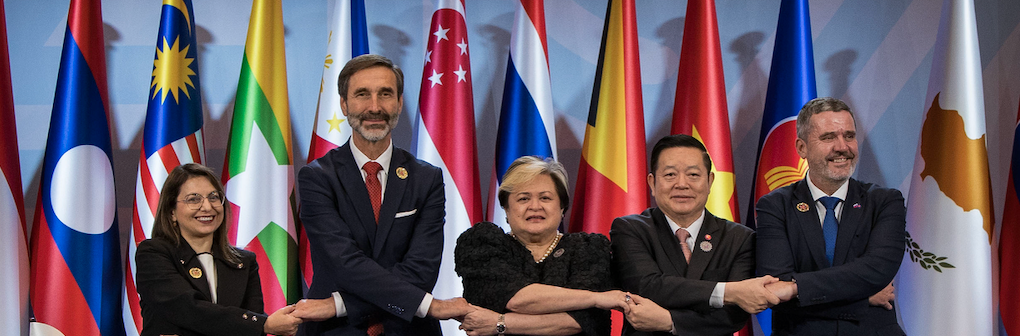
On November 14, 2026, in Manila, Slovakia formally acceded to the Treaty of Amity and Cooperation (TAC) alongside Slovenia and Cyprus, becoming one of fourteen European Union member states to join the agreement. The move commits Slovakia to the treaty’s core principles: respect for sovereignty and territorial integrity, non-interference in internal affairs, and the peaceful settlement of disputes. More importantly, it signals that Bratislava views Southeast Asia not merely as a distant commercial opportunity but as an increasingly important partner in addressing global economic and strategic challenges.
For Slovakia, accession forms part of a wider effort to build a presence in the Indo-Pacific. In December 2025, the Ministry of Foreign and European Affairs of the Slovak Republic adopted the Strategic Concept for the Engagement of the Slovak Republic in the Indo-Pacific Region. The document recognized that developments in the Indo-Pacific shape prosperity, security, supply chains, technological innovation, and political stability far beyond the region itself.
Since adopting the strategy, Slovakia has translated words into action by reopening embassies in Kuala Lumpur and Canberra. Moreover, during his November 2026 visit, Foreign Minister Juraj Blanár officially opened Slovakia’s first resident embassy in Manila.
Critics may ask why a country of roughly 5.4 million people with no coastline should invest diplomatic resources thousands of kilometers away. The answer lies in economic interests. Slovakia is a trade-dependent economy, with exports accounting for nearly 90% of its GDP. Its prosperity depends on open markets, stable trade routes, reliable supply chains, and a predictable international environment. Southeast Asia is progressively central to all of these.
With approximately 690–700 million inhabitants and a combined GDP exceeding four trillion U.S. dollars, ASEAN has become one of the world’s most dynamic economic centers. The region plays a critical role in advanced manufacturing, electronics, digital services, logistics, and global value chains. As companies seek to diversify production networks and reduce excessive dependence on any single market, Southeast Asia’s attractiveness continues to grow.
Yet the significance of Slovakia’s decision extends beyond trade. By joining the TAC, Slovakia expresses support for ASEAN centrality at a moment of intensifying geopolitical competition in the Indo-Pacific. For European countries, ASEAN’s emphasis on consensus and diplomacy remains highly relevant. While Europe and Southeast Asia face different security environments, both regions have a strong interest in preserving a rules-based international order, supporting freedom of navigation, protecting open trade, and preventing disputes from escalating into conflict.
This is particularly important as discussions about the future of the Indo-Pacific often focus primarily on major powers. ASEAN’s enduring contribution has been to provide a platform through which middle and smaller powers can shape regional discussions and advance practical cooperation. Slovakia’s accession acknowledges that reality.
The timing is equally noteworthy. Relations between the European Union and ASEAN have steadily deepened over the past decade. The two regional blocs are preparing to commemorate the fiftieth anniversary of formal relations during the ASEAN-EU Summit in Singapore.
There is growing momentum behind proposals to elevate the current ASEAN-EU Strategic Partnership to a Comprehensive Strategic Partnership. Efforts also continue to advance the long-term goal of a region-to-region free trade agreement. While such ambitions remain hard to achieve, the overall direction is clear: Europe and Southeast Asia are becoming increasingly important partners.
Slovakia’s accession to the TAC fits naturally within this broader trend. It demonstrates how individual European states can complement collective EU engagement while developing their own constructive relationships with ASEAN and its member states. It also illustrates how smaller countries can contribute meaningfully by focusing on practical cooperation in areas where they possess expertise.
For Slovakia, these areas include water management, environmental technologies, climate adaptation, digitalization, education, research, and innovation. None of these sectors attract headlines comparable to great-power competition, but they are precisely the fields where long-term partnerships often deliver tangible results.
As the Indo-Pacific continues to shape the global economy and international affairs, countries that wish to remain connected to emerging opportunities must be present, engaged, and willing to invest in long-term relationships. Accession to the TAC should therefore be viewed as the beginning of deeper engagement between Slovakia and Southeast Asia.
Erik Lenhart (erik.lenhart1@gmail.com) is a former Deputy Chief of Mission of the Slovak Republic in Tokyo and the author of the award-winning novel Daughters of the Empire.
Photo credit: Ministry of Foreign and European Affairs of the Slovak Republic
Source:
https://www.flickr.com/photos/mzvsr/55652139778/in/album-72177720336867887




