
Dr. Frank Yuan
China has a growing interest in minimizing military risks in the South China Sea.
China is expanding its strategic influence in the South China Sea through more than military outposts and artificial islands. The new Pinglu Canal, designed to open a shorter shipping route between southern China and Southeast Asia, underscores Beijing’s growing reliance on trade infrastructure to strengthen its regional presence while seeking to avoid conflict and manage maritime tensions on its own terms.
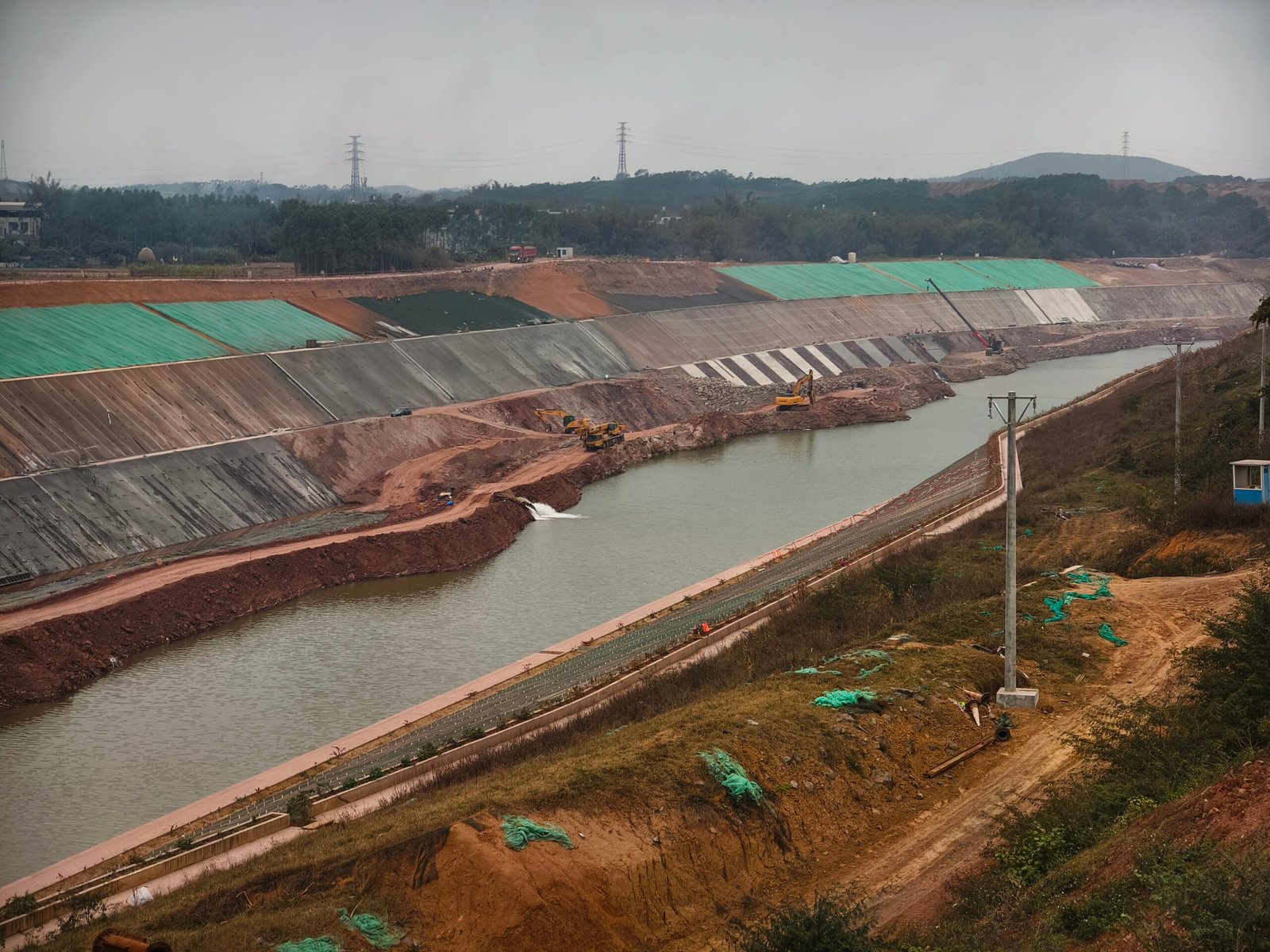
Operational since September 2026, the Pinglu Canal connects the Gulf of Tonkin (also known as Beibu Gulf) to the Yu River, upstream of the Pearl River system. The 84-mile-long canal gives much of the southern province of Guangxi a shortcut to the South China Sea via its own port city, Qinzhou, reducing transport distance by up to 350 miles, while creating a viable alternative to the Pearl River, where shipping routes converge and can bottleneck near Guangzhou, China’s manufacturing hub. Through road, rail, and potentially additional canals inland, this route can also be shared by other landlocked provinces in southwestern China. The Pinglu Canal is a crucial link in a land-sea transportation corridor designed to give the region greater connectivity to the Association of Southeast Asian Nations (ASEAN) and the rest of the world.
The geopolitical logic for China is self-evident: an ASEAN deeply interdependent with China makes for a neighborhood where Beijing’s influence is harder to challenge.
Economic integration between China and ASEAN has been one of the most persistent trends in the face of “de-globalization.” China and the ASEAN bloc are each other’s largest trading partners, and trade with China is now a much larger share of ASEAN’s total international trade than it was in the late 2010s. Even trade between China and the Philippines is again approaching the level before their diplomatic tensions reignited in the early 2020s. Manufacturing supply chains now run between China and ASEAN countries, as Chinese firms have relocated lower-skilled processes to the latter while continuing to make core components efficiently at home.
The Pinglu Canal can help deepen this integration. For instance, the transport corridor through China’s southwest already envelopes burgeoning electric vehicle (EV) and battery factories in Chongqing and Guangxi, the lithium mines in Sichuan and phosphate resources in Guizhou – the latter two being crucial ingredients for lithium-ion batteries. Yet China still needs nickel imports to complete these batteries; Indonesia and the Philippines are its largest suppliers. The canal can give China’s new industrial cluster easier access to these raw materials. In turn, the assembled EVs or intermediate products can be shipped out from Guangxi to ASEAN customers.
Of course, China is cultivating its southwestern provinces primarily for domestic reasons, as part of economic diversification from the country’s already prosperous coastal regions. Aside from the prospect of unleashing rapid growth in its historically left-behind region, the strategy also promises social benefits: having more employment opportunities in the hinterland will help young people stay put, rather than having to migrate to the country’s coastal metropolises.
Importantly, China is allowing itself to remain economically exposed to the South China Sea, despite the ongoing overland infrastructure build-out westward through Central Asia. The economic benefits of China’s south-facing transportation corridor anchored by the Pinglu Canal – and any knock-on effects through economic diplomacy – can only be fully realized if the South China Sea remains a peaceful, open passage for shipping.
In other words, China continues to have a major stake in minimizing the risks of conflict in the South China Sea. Any military conflict there – or even a heightened risk of such – would entail significant shipping disruption. Recent events in the Strait of Hormuz and the Strait of Bab al-Mandab have shown how vulnerable cargo ships are to low-cost drones and missiles. To be sure, disruption from a localized conflict might be more manageable for Beijing than the experience of the Gulf states. The South China Sea is much wider than those straits, potentially allowing for re-routing ships away from the firing range of the relatively unsophisticated anti-ship weapons. This might be achievable once China has neutralized the adversary’s more advanced capabilities and if, crucially, the adversary was fighting alone.
China thus has a strong imperative to stabilize its relationships across ASEAN and avoid escalating the South China Sea disputes. Of course, China can be expected to defend its claims with assertiveness and calculated shows of force, not to compromise merely for economic benefits. It may also be confident in its ability to deter such conflicts from arising in the first place.
Beijing likely also believes that the more cargo ships are traversing the South China Sea, the fewer warships will be needed. Economic integration cultivates interests in other claimant states which would also loathe seeing businesses disrupted, either from territorial disputes or entanglement in great power rivalry. This is perhaps not unrealistic: with their economies deeply intertwined, however acrimonious the U.S.-Canadian relationship has become under the Trump administration, there has been no hint of Ottawa seeking to exacerbate their disagreements or indeed enlist the support of another great power.
The geopolitics of the South China Sea is thus more than the military balance. Economic relationships are an integral part of the regional dynamic.
Dr. Frank Yuan is an Adjunct Fellow of the Australia-China Relations Institute at the University of Technology Sydney (UTS: ACRI). His research and writing cover Australian and Chinese foreign policies, as well as Chinese society and economy.




