
By Jillian E. Thompson
While much public attention has been focused on China’s aircraft carriers and surface fleets, Beijing has invested in building a more capable undersea force and in-depth knowledge of the ocean floor. Detailed seabed mapping is not merely academic but constitutes a foundation for building strategic competence. Underwater navigation, acoustic concealment, and anti-submarine warfare planning can all be advanced through knowledge of the ocean’s landscape. In addition, possessing detailed knowledge of temperature gradients and salinity layers lets submarines exploit “shadow zones” where sonar can’t easily detect them. Beijing has further invested in a undersea force comprising nuclear-powered ballistic missile submarines (SSBNs), nuclear-powered attack submarines (SSNs), and advanced diesel-electric attack submarines (SSKs). These capabilities provide China with the potential of a credible sea-based nuclear deterrent and enable increasingly sustained operations beyond its coastal waters.
China’s expansion of the People’s Liberation Army Navy (PLAN) submarine force shows how the undersea domain is becoming a central arena of great‑power competition, and we should be paying attention to it.
Background
Chinese interest in undersea warfare is not a recent phenomenon. The establishment of the PLAN’s first submarine force in 1954 marked the beginning of a long-term effort to develop submarine capability. Initially intended to compensate for China’s relatively weak surface fleet, the submarine force has since evolved into a requirement of Beijing’s maritime strategy.
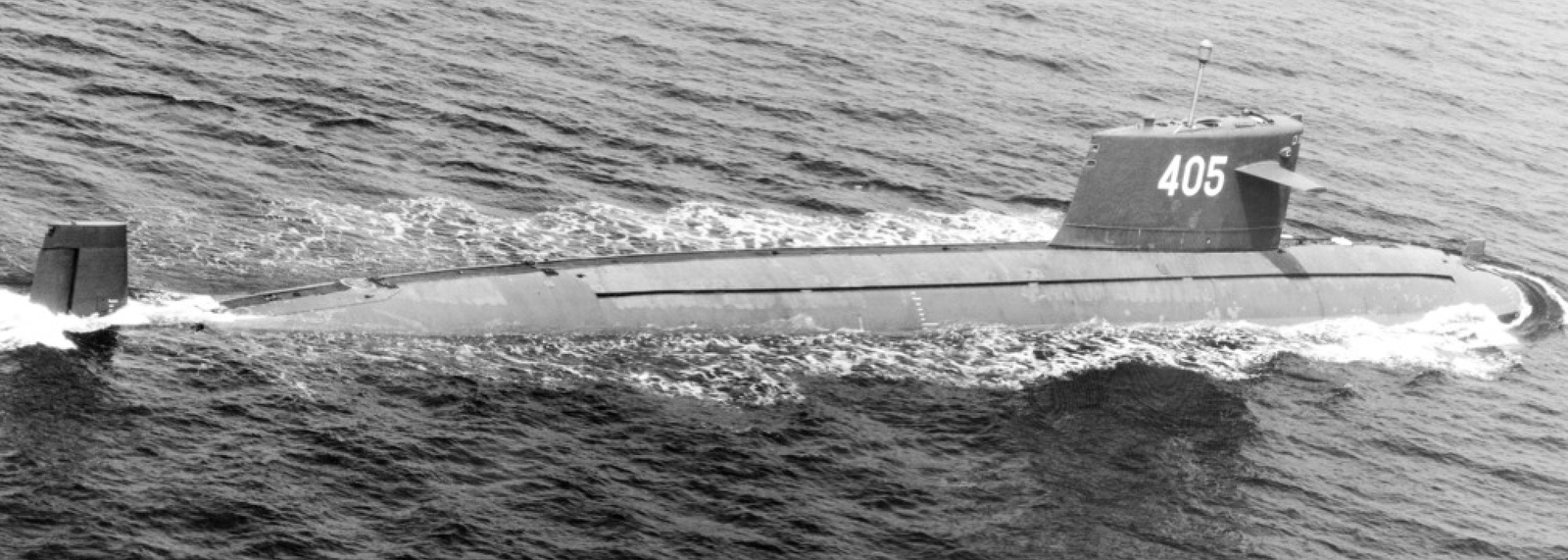
Current PLAN modernization efforts have been driven by Xi’s broader military reform agenda. Prolonged investment in domestic shipbuilding, nuclear propulsion, and undersea weapons systems has transformed the PLAN into the world’s largest navy and has brought its submarine capabilities to new heights. Today, the fleet includes a total of six Shang-class submarines, six Type 094 Jin-class SSBNs, and more than 50 diesel-electric attack submarines. With three shipyards producing nuclear power submarines and growing fleet expansion, China is predicted to significantly expand its submarine fleet to 80 by 2035. This new development would significantly impact the maritime balance within the Indo-Pacific and raise tension between the United States and China.
Recorded Submarine Deployments
Since 2023, the South China Sea has experienced an increase in PLAN submarine activity. China has conducted increasingly routine strategic-deterrence patrols within and beyond China’s near seas. Their undersea presence has remained throughout 2024 and expanded with an increased U.S. naval presence in the region. Several of the more notable PLAN submarine-related activities were undertaken in response to intensified U.S. freedom of navigation operations (FONOPs), anti-submarine warfare (ASW) patrols, and surveillance and reconnaissance operations.
In 2025, the PLAN expanded its military activities across the Indo-Pacific. In the undersea domain, the PLAN demonstrated the capacity to sustain deployments beyond the First Island Chain, showcasing its growing blue-water capabilities. The summer 2026 combat-training deployment of the Liaoning carrier strike group into the South China Sea and Philippine Sea was widely assessed to have been supported by nuclear-powered attack submarines. The integration of attack submarines into Chinese carrier strike group (CSG) operations is becoming a salient feature of the PLAN’s naval formations. Meanwhile, strategic deterrence patrols by Type 094 ballistic missile submarines continue. Collectively, these developments increase the PLAN’s ability to project itself as the dominant figure over contested waters.
The Implications:
China’s investments in undersea warfare have notable implications for strategic balance in the South China Sea. Increased modernization is equivalent to an increased effort to deter adversaries, protect sea-based nuclear deterrents, and contest access to important maritime spaces. Since 2015, PLAN doctrine has combined “offshore waters defense” with “open seas protection,” a shift that requires the continued production of nuclear-powered submarines. For the United States, these developments present a growing challenge to maintaining maritime superiority and upholding FON in the region. A 2025 Congressional Research Service report argued that China’s naval modernization since the 1990s has narrowed the capability gap between the U.S. Navy and the PLAN. It further noted that Beijing pursued an ambitious military modernization program aimed at establishing a fully modernized armed force by 2027.
As of June 2026, that timeline is no longer abstract. On July 6, the PLAN test-fired a submarine-launched ballistic missile from the South China Sea into the Pacific, timed to coincide with the opening of its annual joint naval exercise with Russia. The missile, launched from one of the six Type 094 nuclear-powered ballistic missile submarines China now operates, is quoted by Naval News to have “reportedly traveled about 7,300 kilometers from the South China Sea, with the warhead believed to have landed in open waters outside Japan’s exclusive economic zone but within the broader South Pacific Nuclear Free Zone established by the Treaty of Rarotonga.” The launch was designed to send an unambiguous signal: that China’s sea-based deterrent can deliver a nuclear warhead across the Pacific reliably, and on demand.
The 2027 deadline therefore functions less as a hard finish line than as a pacing target Beijing is using to measure its own progress. By most indications, China is keeping pace, particularly in a domain where the ocean itself makes confirmation difficult. For the U.S. Navy, closing this gap will take more than just increasing hull production; it demands the same undersea terrain knowledge that China has been developing—intimate familiarity with the ocean floor sufficient to find what China is working hard to hide.




