
By Erik Lenhart and Michael Tkacik
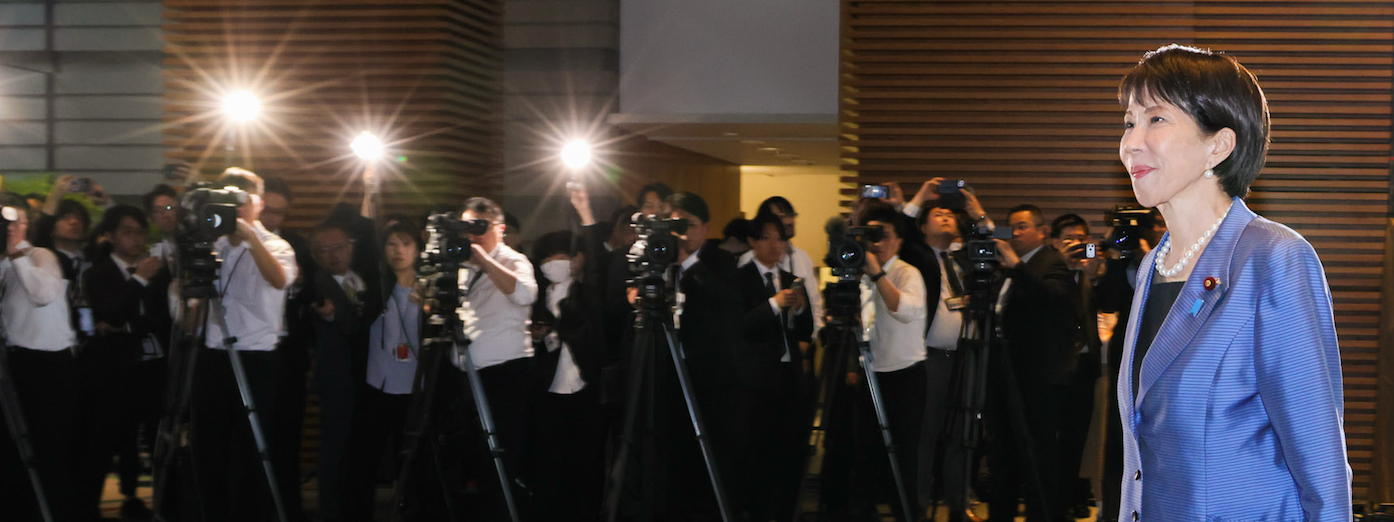
Prime Minister Sanae Takaichi’s recent diplomatic tour to the United Kingdom, Italy, and the G7 Evian Summit in France demonstrated how Tokyo is steadily expanding its functional global partnerships amid worsening geopolitical fragmentation. Far from a routine exercise driven by domestic political calculations, her recent initiatives reveal a leader firmly operating within the strategic tradition established by former Prime Minister Shinzo Abe. By treating economic security, technological resilience, energy security, intelligence capabilities, and traditional defense cooperation as inseparable components of national power, Takaichi is adapting Japan’s foreign policy to a more dangerous and volatile international environment.
Multilateral Frameworks and the Geopolitics of Critical Minerals
Nowhere is this shift clearer than in Japan’s approach to critical minerals and rare earth supply chains. Japanese policymakers have not forgotten the lessons of 2010, when Beijing effectively weaponized rare earth exports following the Senkaku Islands crisis. While Tokyo initially responded with national measures—such as diversifying suppliers and building stockpiles—Takaichi recognizes that unilateral actions are no longer sufficient against dominant processing monopolies.
Consequently, Japan arrived at the G7 Summit with one of the meeting’s most consequential proposals: the creation of a coordinated framework for stockpiling critical minerals, sharing reserves during disruptions, and jointly developing alternative supply chains. By integrating the International Energy Agency and multilateral development banks into this mechanism, Tokyo seeks to establish durable market structures that reduce systemic vulnerabilities. The resulting G7 declaration suggests that Japan has successfully placed economic security at the center of the advanced democracies’ alliance agenda, the Critical Minerals Resilience and Production Alliance.
Securing these supply chains has become a prerequisite for maintaining both military readiness and economic prosperity, applying the same strategic logic to critical minerals that previous generations applied to energy security during the oil shocks of the 1970s.
Expanding the Geoeconomic Frontier
Takaichi’s approach is notable for its panoramic view of statecraft, resisting the temptation to treat security, trade, and diplomacy as separate policy silos. This broader vision is evident in Japan’s decision to launch negotiations for an Economic Partnership Agreement (EPA) with Mercosur, the South American trade bloc comprising Brazil, Argentina, Uruguay, Paraguay, and Bolivia. This ambitious free-trade agenda directly complements Tokyo’s economic security strategy by diversifying sources of strategic commodities while opening new markets for Japanese exports.
In this respect, Japan increasingly mirrors the European Union in its commitment to an open, rules-based trading system. Both Tokyo and Brussels continue to champion comprehensive trade liberalization at a time when protectionist pressures have grown significantly within the United States. By pursuing strategic resilience and market openness simultaneously, the Takaichi government is demonstrating that economic security does not mean economic isolation but rather building a wider network of trusted global partners.
Institutionalizing “Quasi-Alliances” in Europe
This synchronized strategy was further reinforced during bilateral engagements in Europe. In London, Takaichi and British Prime Minister Keir Starmer issued a Joint Declaration on Economic Security Cooperation and launched a Frontier Technology Partnership. The agreements institutionalize bilateral cooperation across semiconductors, cybersecurity, nuclear innovation, and research funding. Crucially, both leaders reaffirmed that the security of the Indo-Pacific and the Euro-Atlantic are structurally interconnected, reflecting a reality that strategic challenges can no longer be compartmentalized by geography.
A similar strategic convergence was achieved in Rome during Takaichi’s summit with Italian Prime Minister Giorgia Meloni. Building upon the Japan-Italy Special Strategic Partnership, the center of their discussions focused on the Global Combat Air Programme (GCAP). Alongside the United Kingdom, this joint venture to develop a next-generation fighter aircraft represents an unprecedented level of technological and defense-industrial integration among advanced democracies. Furthermore, Takaichi utilized the Rome summit to methodically build a bilateral coalition for her critical-minerals stockpiling initiative before introducing it to the broader G7 forum—a hallmark of effective Japanese statecraft.
Strengthening the Domestic Foundations of Power
Beyond external diplomacy, Takaichi is systematically modernizing the domestic machinery of Japanese power to support this grand strategy. Her government’s initiative to establish a National Intelligence Council and a National Intelligence Bureau aims to overcome long-standing coordination barriers within Japan’s fragmented intelligence community. Much like the creation of the National Security Council under Abe, these institutional reforms ensure that policymakers receive higher-quality information and can respond dynamically to a complex security environment where economic, technological, and military threats overlap.
Ultimately, these developments reveal a highly coherent grand strategy. Rather than retreating inward as the international order becomes more contested, Japan is actively shaping the rules, institutions, and partnerships of the next era. Through flexible, functional frameworks that reinforce national resilience while preserving diplomatic maneuverability, Takaichi is ensuring that Shinzo Abe’s strategic vision remains the guiding force of modern Japanese statecraft.
Erik Lenhart (erik.lenhart1@gmail.com) holds an MA in political science from Charles University. He is a former Deputy Chief of Mission of the Slovak Republic in Tokyo and the author of the award-winning novel Daughters of the Empire.
Michael Tkacik (mtkacik@sfasu.edu) holds a PhD from the University of Maryland and a JD from Duke University. He is a professor of government and director of the School of Honors at Stephen F. Austin State University, The University of Texas System.




